
面试经典算法7-反转链表
LeetCode.206
问题描述
给你单链表的头节点 head ,请你反转链表,并返回反转后的链表。
示例 1:
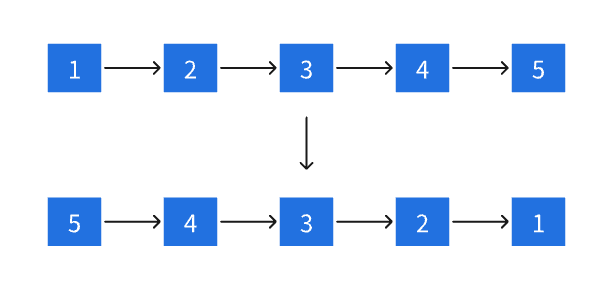
输入:head = [1,2,3,4,5]
输出:[5,4,3,2,1]
示例 2:
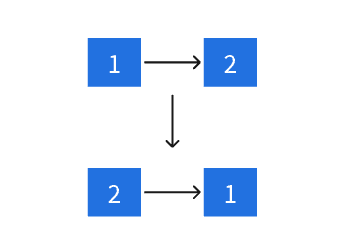
输入:head = [1,2]
输出:[2,1]
示例 3:
输入:head = []
输出:[]
思路
这里给大家讲最经典的双指针法。
- 如果链表为空或者只有一个节点,直接返回头结点head。
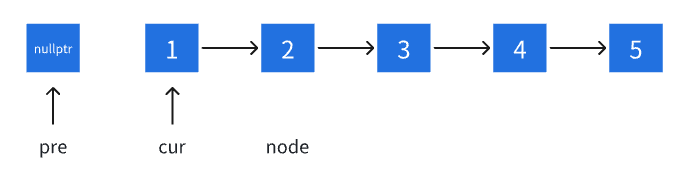
- 初始化 pre 为 nullptr,cur 为头结点 head,node 为 cur 的下一个节点。
- 在循环中,不断更新 pre、cur 和 node 的值,使得 cur 的 next 指向 pre,然后将 pre、cur 和 node 分别向后移动一位。
- 当 cur 移动到链表末尾时,pre 就是反转后的新头结点。
演示过程:
初始状态:

第一步:
先定义一个空节点并初始化为nullptr,分别将这两个指针指向这个空节点和头结点,再定义一个节点用来临时存放节点。
ListNode* pre = nullptr; // 初始化 pre 为 nullptr
ListNode* cur = head; // 初始化 cur 为头结点
ListNode* node = nullptr; // 初始化 node 为 nullptr
第二步:
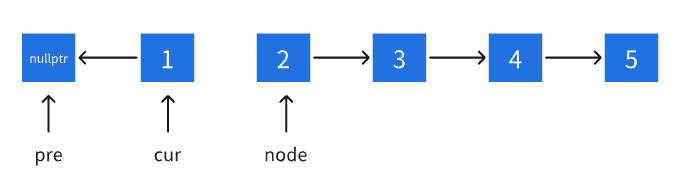
node = cur->next; // 保存当前节点的下一个节点
cur->next = pre; // 当前节点的 next 指向 pre,完成反转
第三步:
pre = cur; // 更新 precur = node; // 更新 cur
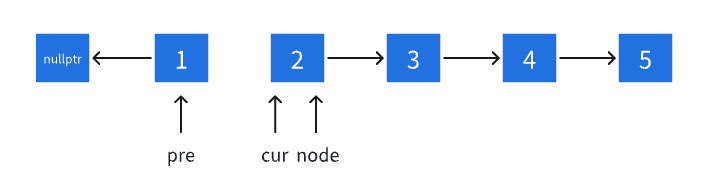
到这里,其实我们就可以使用一个循环,让继续这两步操作。不过为了大家更加看明白,我就将这个示例画完吧。
第四步:
node = cur->next; // 保存当前节点的下一个节点
cur->next = pre; // 当前节点的 next 指向 pre,完成反转
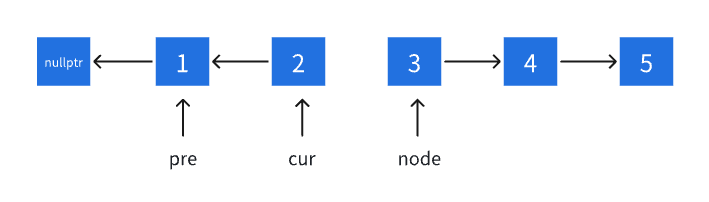
第五步:
pre = cur; // 更新 precur = node; // 更新 cur
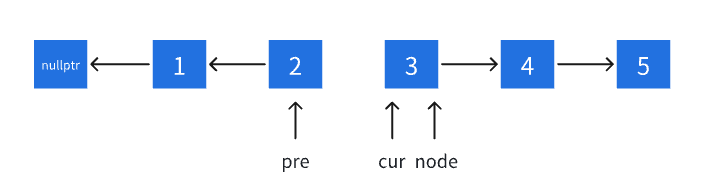
第六步:
node = cur->next; // 保存当前节点的下一个节点
cur->next = pre; // 当前节点的 next 指向 pre,完成反转
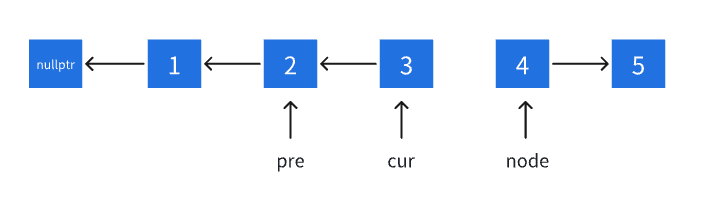
第七步:
pre = cur; // 更新 precur = node; // 更新 cur
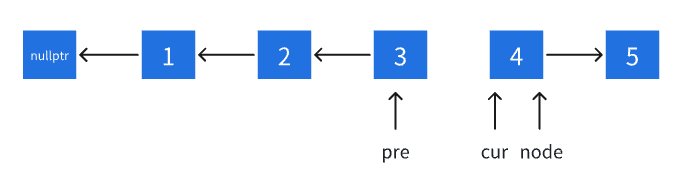
第八步:
node = cur->next; // 保存当前节点的下一个节点
cur->next = pre; // 当前节点的 next 指向 pre,完成反转
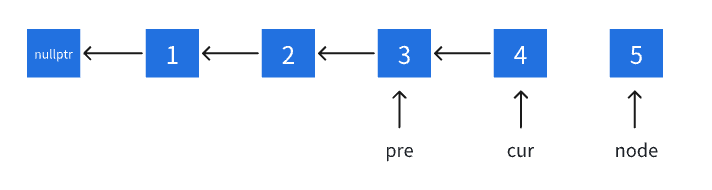
第九步:
pre = cur; // 更新 precur = node; // 更新 cur
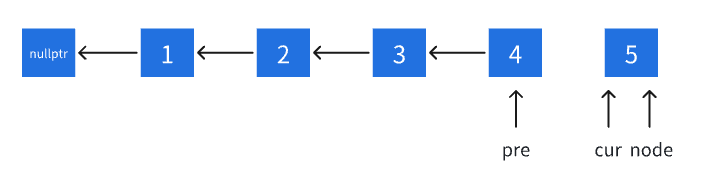
第十步:
node = cur->next; // 保存当前节点的下一个节点
cur->next = pre; // 当前节点的 next 指向 pre,完成反转
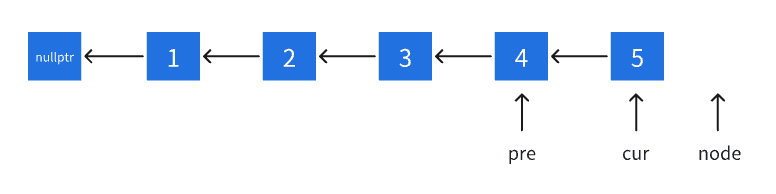
第十一步:
pre = cur; // 更新 precur = node; // 更新 cur
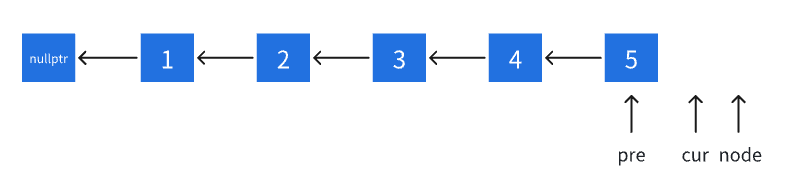
此时cur==nullptr,退出循环。
参考代码
C++
#include <iostream>

struct ListNode {
    int val;
    ListNode* next;
    ListNode(int x) : val(x), next(nullptr) {}
};

class Solution {
public:
    ListNode* reverseList(ListNode* head) {
        if (head == nullptr || head->next == nullptr) {
            return head; // 如果链表为空或者只有一个节点,直接返回头结点
        }

        ListNode* pre = nullptr; // 初始化 pre 为 nullptr
        ListNode* cur = head; // 初始化 cur 为头结点
        ListNode* node = nullptr; // 初始化 node 为 nullptr

        while (cur != nullptr) {
            node = cur->next; // 保存当前节点的下一个节点
            cur->next = pre; // 当前节点的 next 指向 pre,完成反转
            pre = cur; // 更新 pre
            cur = node; // 更新 cur
        }

        return pre; // pre 就是反转后的新头结点
    }
};

int main() {
    ListNode* head = new ListNode(1);
    head->next = new ListNode(2);
    head->next->next = new ListNode(3);

    Solution solution;
    ListNode* newHead = solution.reverseList(head);

    while (newHead != nullptr) {
        std::cout << newHead->val << " ";
        newHead = newHead->next;
    }

    return 0;
}
Java
class ListNode {
    int val;
    ListNode next;

    ListNode(int x) {
        val = x;
    }
}

class Solution {
    public ListNode reverseList(ListNode head) {
        if (head == null || head.next == null) {
            return head; // 如果链表为空或者只有一个节点,直接返回头结点
        }

        ListNode pre = null; // 初始化 pre 为 null
        ListNode cur = head; // 初始化 cur 为头结点
        ListNode node = null; // 初始化 node 为 null

        while (cur != null) {
            node = cur.next; // 保存当前节点的下一个节点
            cur.next = pre; // 当前节点的 next 指向 pre,完成反转
            pre = cur; // 更新 pre
            cur = node; // 更新 cur
        }

        return pre; // pre 就是反转后的新头结点
    }
}

public class Main {
    public static void main(String[] args) {
        ListNode head = new ListNode(1);
        head.next = new ListNode(2);
        head.next.next = new ListNode(3);

        Solution solution = new Solution();
        ListNode newHead = solution.reverseList(head);

        while (newHead != null) {
            System.out.print(newHead.val + " ");
            newHead = newHead.next;
        }
    }
}
Python
class ListNode:
    def __init__(self, val=0, next=None):
        self.val = val
        self.next = next

class Solution:
    def reverseList(self, head: ListNode) -> ListNode:
        if head is None or head.next is None:
            return head  # 如果链表为空或者只有一个节点,直接返回头结点

        pre = None  # 初始化 pre 为 None
        cur = head  # 初始化 cur 为头结点
        node = None  # 初始化 node 为 None

        while cur is not None:
            node = cur.next  # 保存当前节点的下一个节点
            cur.next = pre  # 当前节点的 next 指向 pre,完成反转
            pre = cur  # 更新 pre
            cur = node  # 更新 cur

        return pre  # pre 就是反转后的新头结点

head = ListNode(1, ListNode(2, ListNode(3)))
solution = Solution()
new_head = solution.reverseList(head)
while new_head is not None:
    print(new_head.val, end=" ")
    new_head = new_head.next